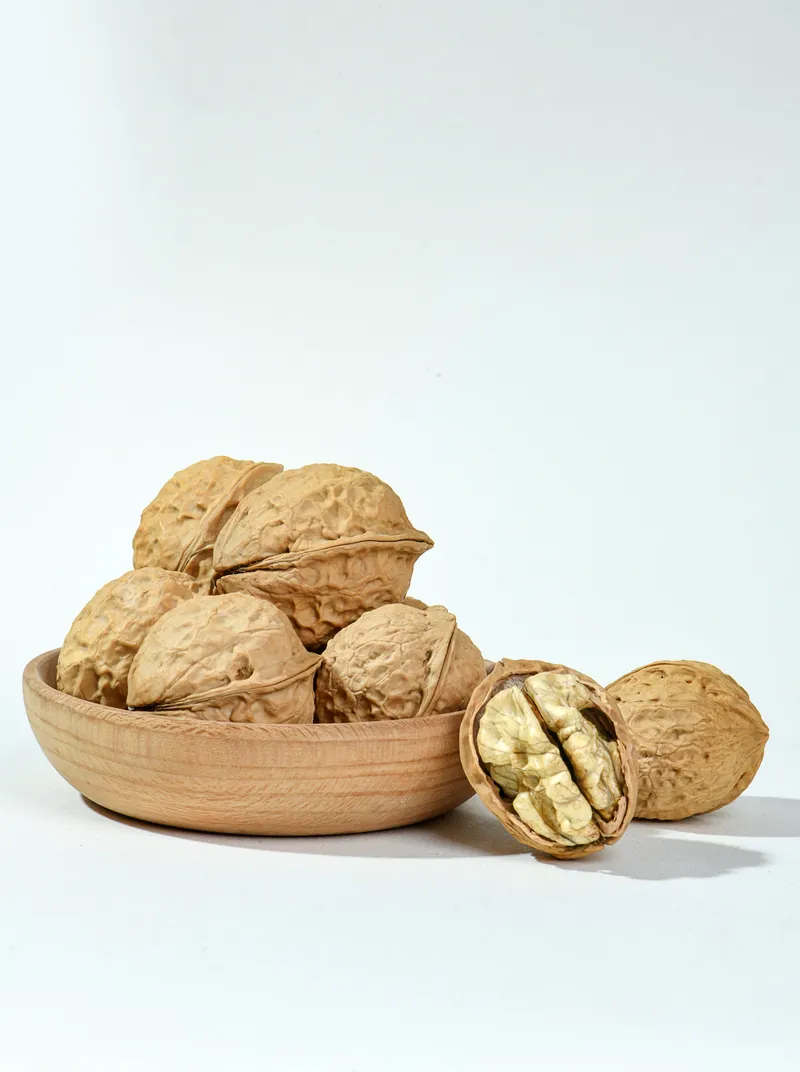


Walnuts in their shells represent the most original and complete form of the walnut’s life. They are not a ready-to-eat snack, but rather a natural creation that requires interaction to yield its reward. Holding a walnut in its shell is like holding a secret encased in a woody fortress, a small but fascinating journey of conquest about to begin.
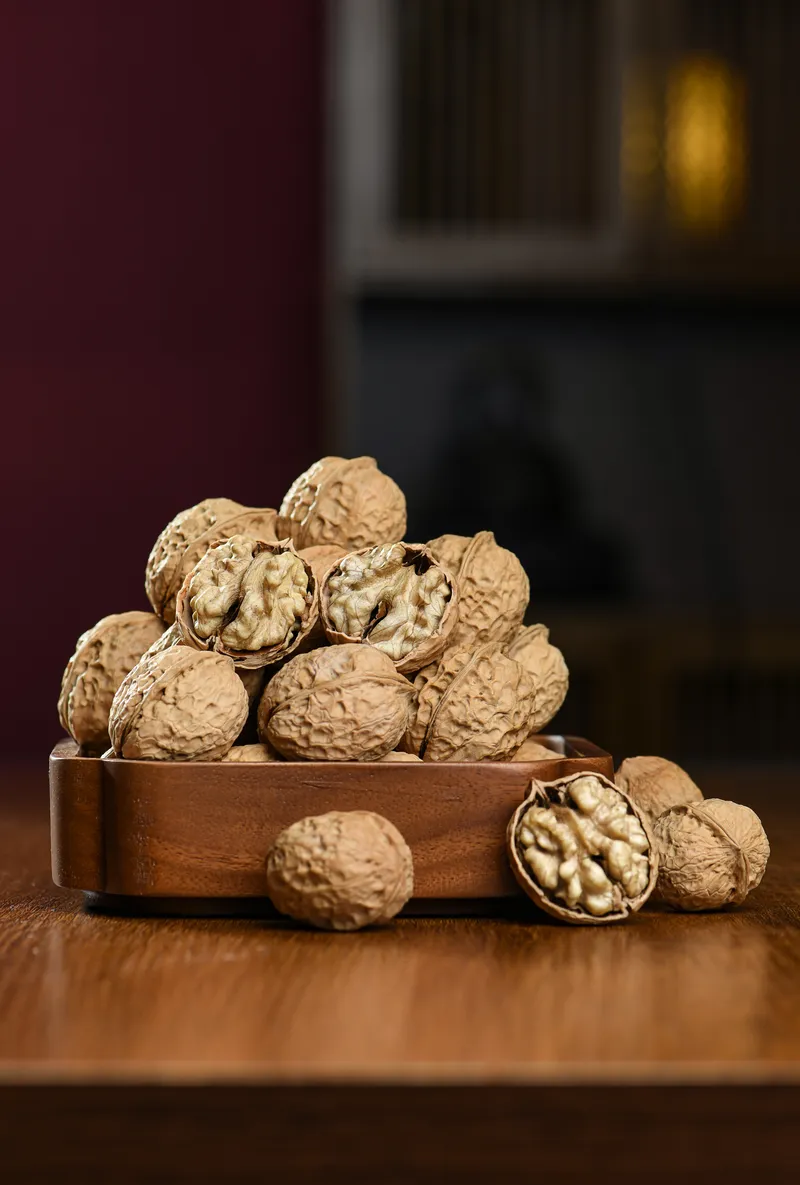
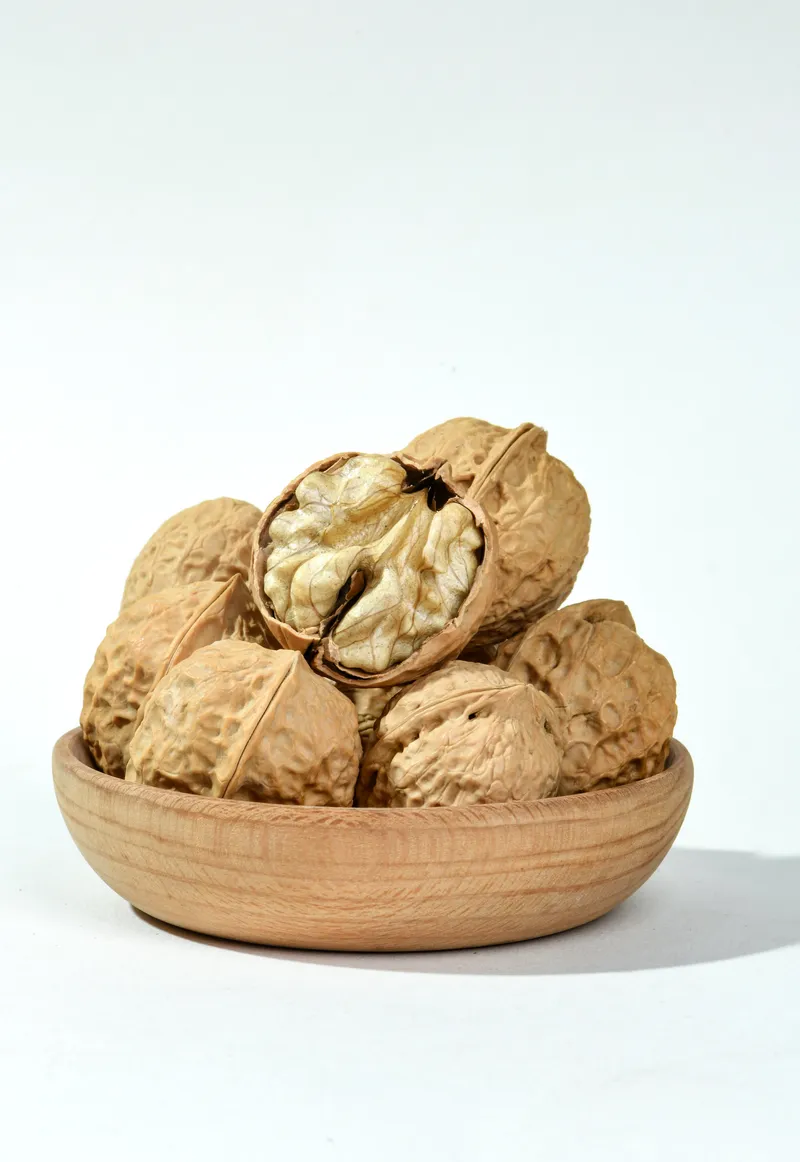
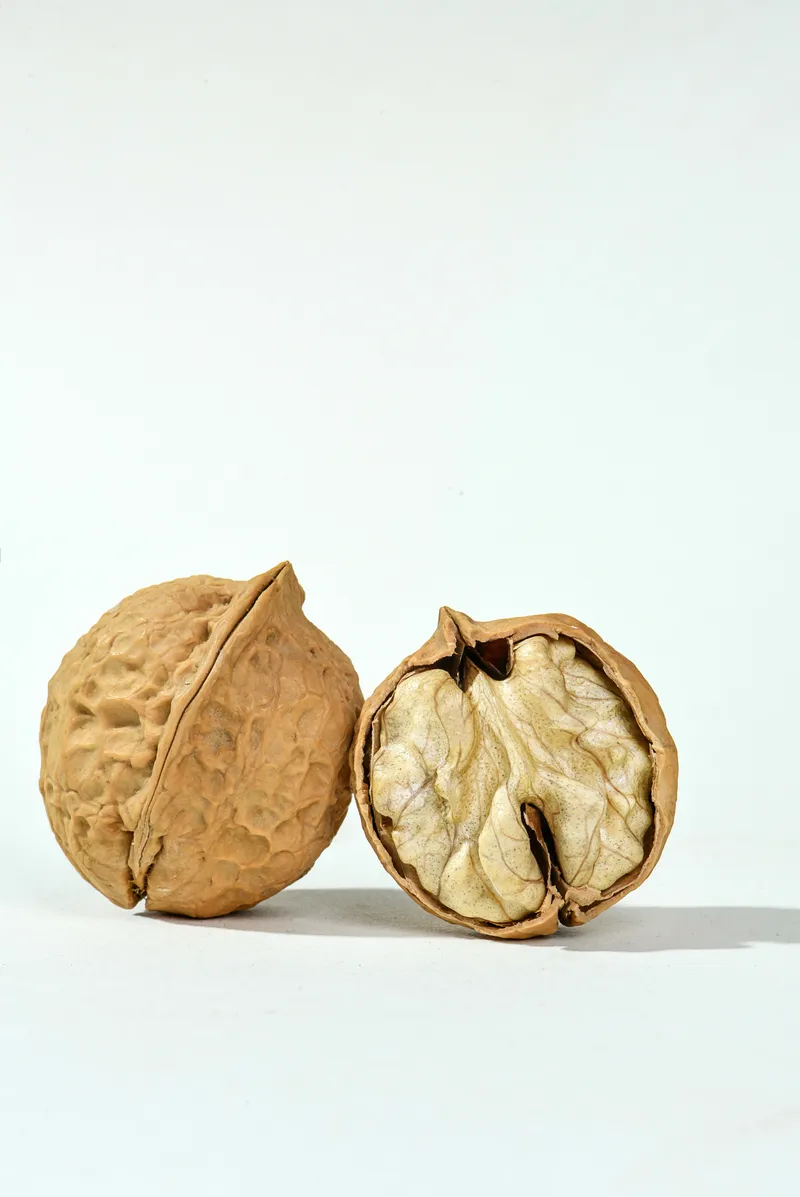
Appearance: It resembles a miniature brain, its shell covered with irregular, deep grooves and wrinkles, displaying a natural transition from light wood to dark brown. Its surface is rough and hard, a work of art sculpted by time and natural forces.
Structure: The shell is divided into two halves, tightly closed by a natural suture, protecting the delicate walnut kernels inside, which reside in two separate “chambers.” Its sturdiness makes it one of the most excellent defensive structures in the plant kingdom.
Enjoying a walnut in its shell is an immersive process that engages multiple senses:
1. Touch and Hearing: The moment you use a nutcracker, your fingers feel the hard resistance, followed by a clear or muffled cracking sound – the first movement of success.
2. Sight and Smell: After the shell breaks, the complex, maze-like woody partitions inside are revealed, requiring skill and patience to remove them. At this point, a fresh and rich woody, oily aroma fills the air.
3. The Joy of Harvest: Finally, you retrieve the whole or slightly broken walnut kernel, wrapped in its light brown seed coat. The taste of this fruit, obtained through your own effort, seems even sweeter because of the anticipation and hard work.
In traditional Chinese culture, a whole walnut in its shell holds richer symbolism than just the kernel:
Form Follows Function, Wisdom and Completeness: Its shape is directly associated with the brain, symbolizing wisdom, thought, and completeness. Playing with a pair of walnuts (as a form of traditional Chinese art) is a way to cultivate oneself; giving walnuts in their shells as a gift carries the blessing of increased wisdom for students. • A symbol of harmony and happiness: Because the Chinese word for “walnut” is a homophone for “harmony” and “togetherness” , it is often considered a symbol of peace and family happiness. It is an essential fruit in traditional weddings, symbolizing “harmony and beauty,” and a dried fruit that symbolizes completeness during the Spring Festival.
Ultimate freshness: The shell is the most natural “vacuum packaging” for walnut kernels, maximizing moisture and oil retention, preventing oxidation, and ensuring that the flavor is at its peak the moment it is opened.
Experiential economy: It offers a slow-paced, engaging eating experience. The process of opening the walnuts creates a direct and intimate dialogue between people and food, a pleasure that pre-shelled nuts cannot replicate.
Emotional connection: The scene of a family sitting together, chatting and cracking walnuts, is inherently full of warmth, intimacy, and emotional connection; walnuts become a medium for gathering and sharing.
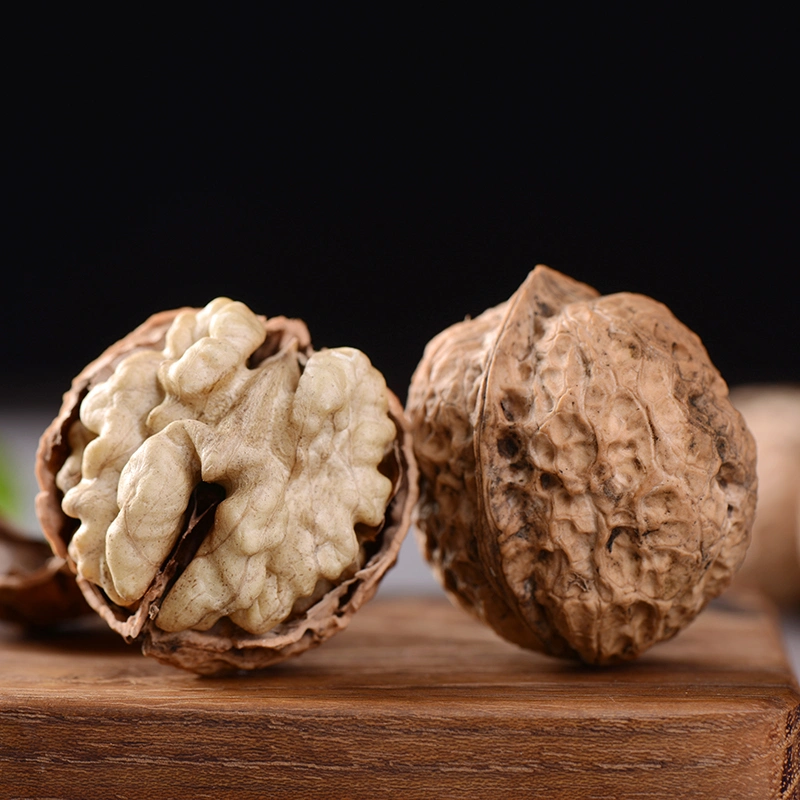
Fengqing shelled walnuts are a natural gift from a region that holds the double distinction of being the “World Capital of Dianhong Black Tea” and the “Walnut Capital of China.” They are not just ordinary nuts, but a geographical indication product that embodies the sunshine of the Tropic of Cancer, the moisture of the Lancang River basin, and millennia of cultivation wisdom.
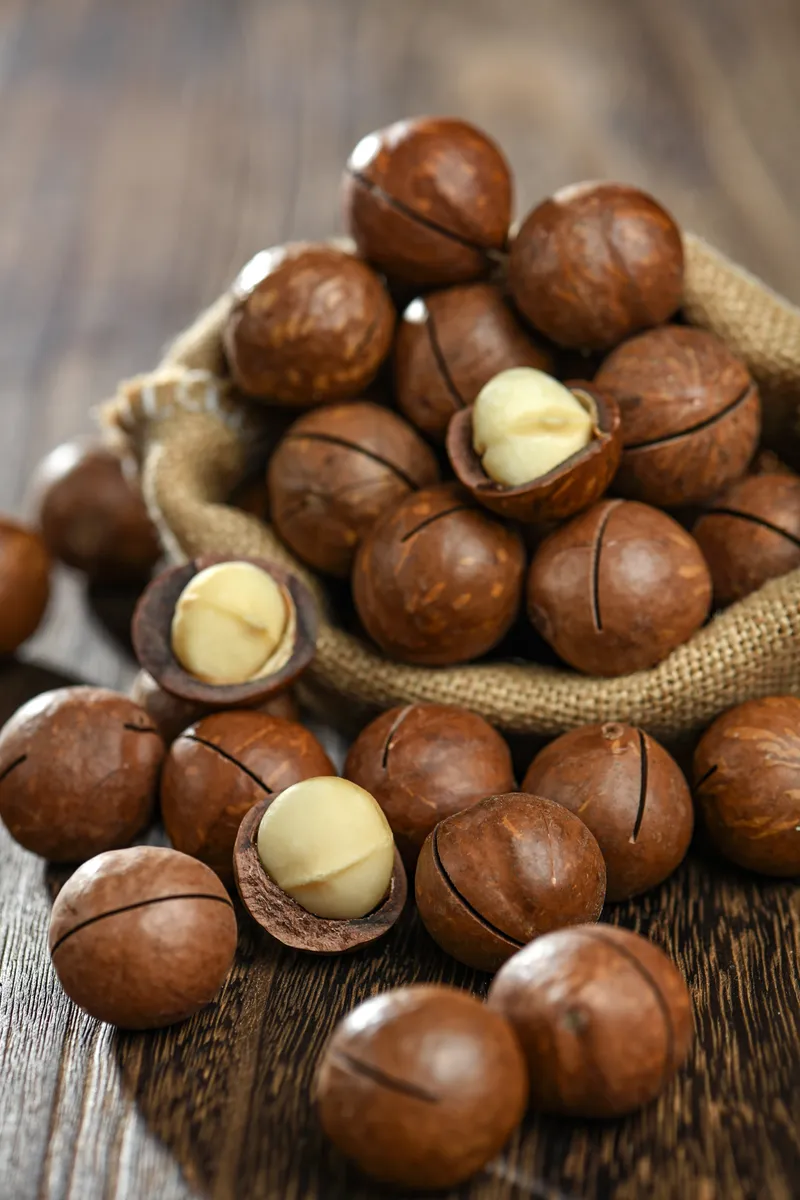
Macadamia nuts in shell, often hailed as the “king of nuts” or the “queen of dried fruits,” are not merely an expensive snack, but an extraordinary product that combines natural wonders, historical circumstances, and meticulous craftsmanship.
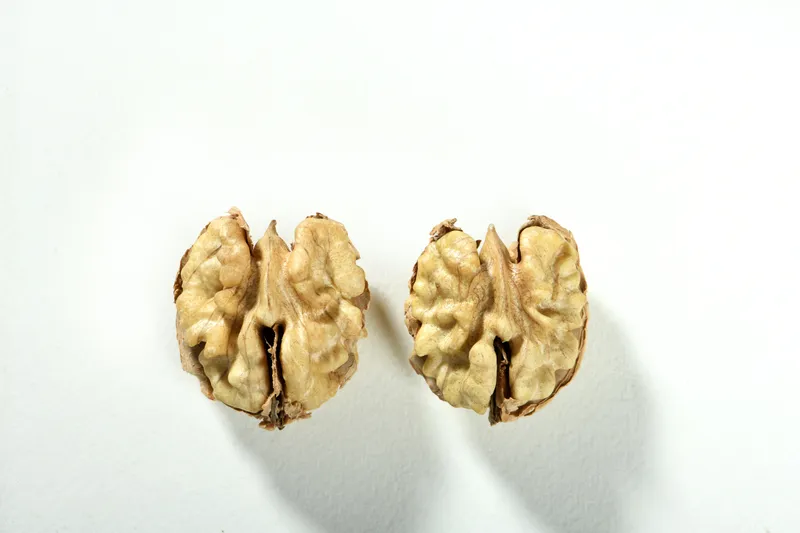
Walnuts, hailed as the “brain-boosting fruit” or “longevity fruit,” with their intricately grooved appearance resembling a miniature brain, hold a revered place in both Eastern traditional health wisdom and Western modern nutrition. They are not merely a nut, but a symbol carrying ancient wisdom and the bounty of nature.
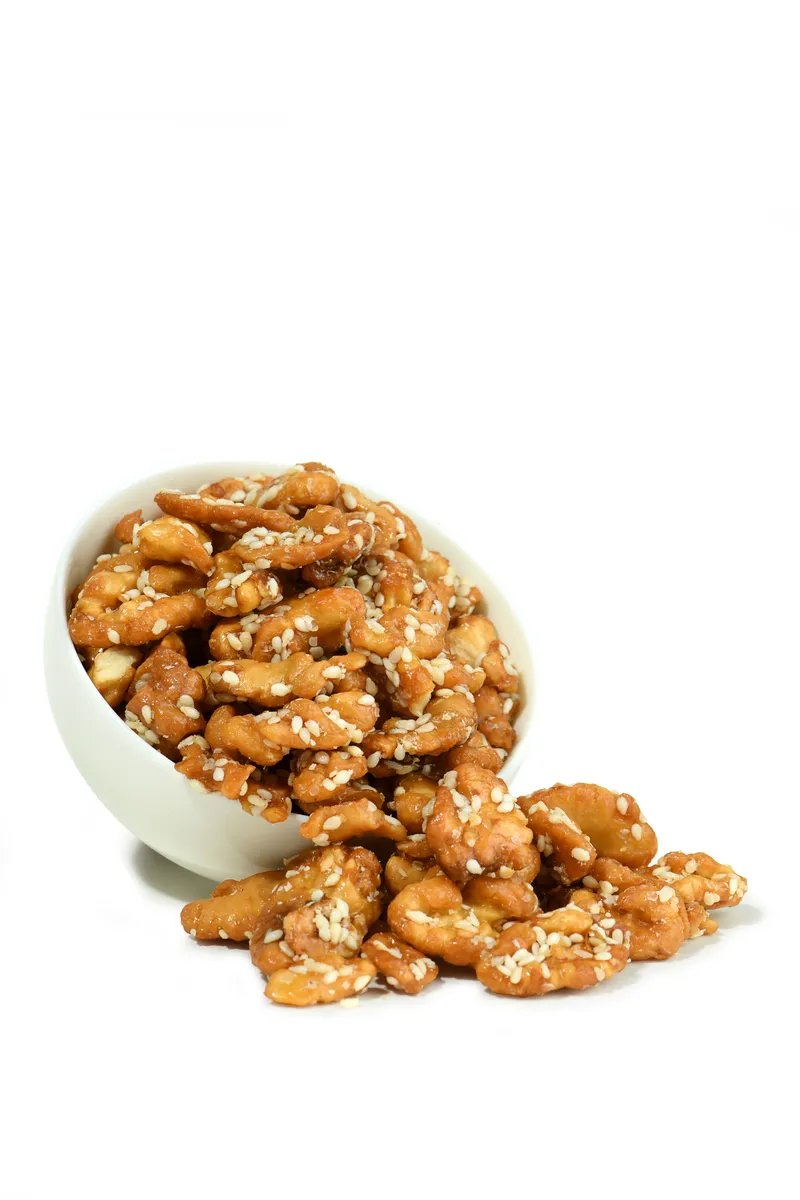
Amber-glazed walnuts are truly a “gem of time” among Chinese nut-based desserts. Starting with ordinary walnuts, they undergo a masterful transformation through the skillful application of sugar and heat, evolving from simple, slightly bitter nuts into a glistening, sweet, and crispy traditional delicacy with an irresistible aroma.
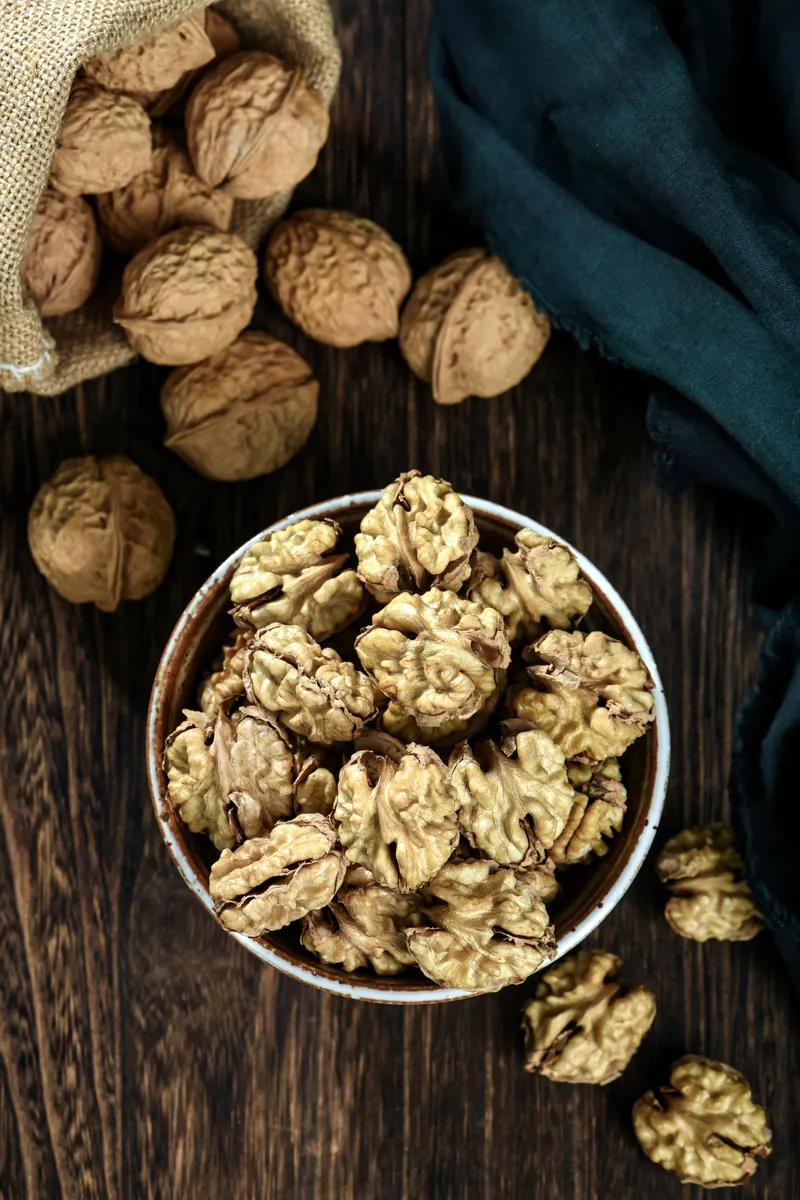
Organic walnut kernels represent an elevation of walnut flavor in both natural and ethical dimensions. They are more than just shelled nuts; they embody a complete commitment to respecting natural rhythms and ecological balance. From soil to palate, behind them lies a rigorous production philosophy, ensuring that every walnut kernel carries the purity of the land and the integrity of the producers.
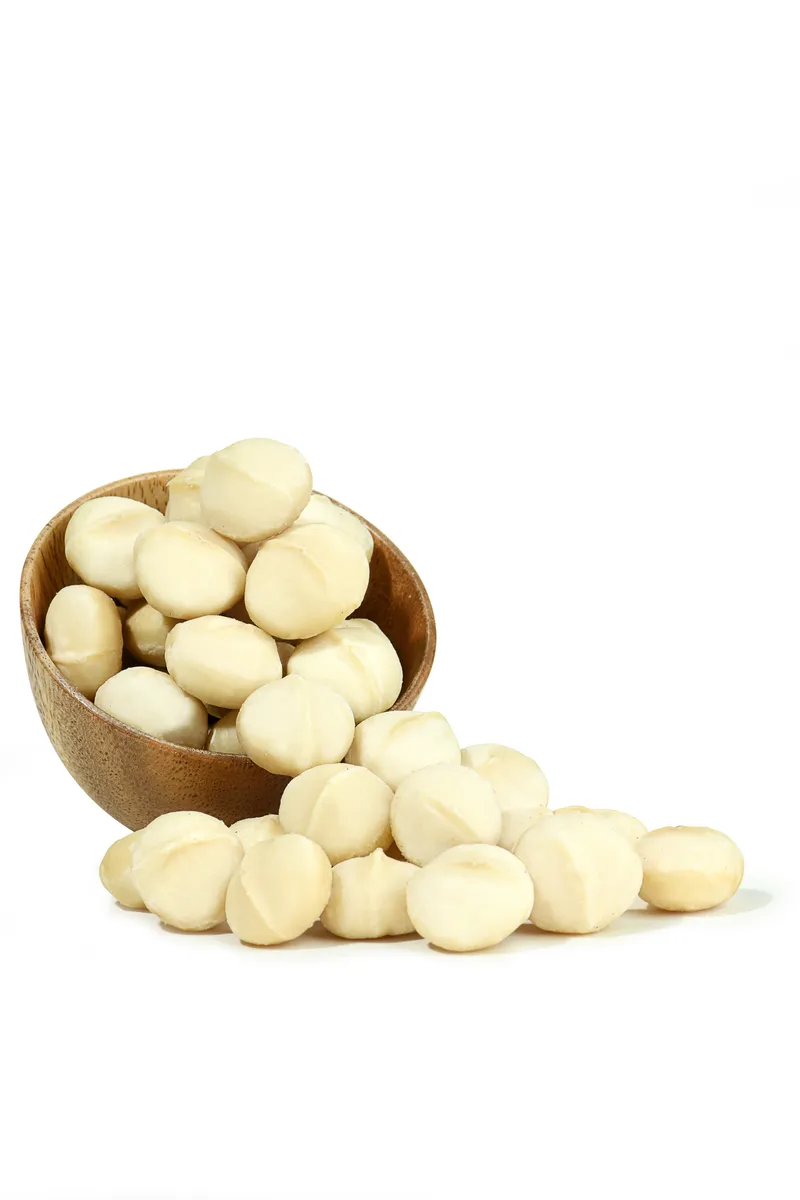
They are not only a culinary delight but also a nutritional powerhouse: • Rich in high-quality monounsaturated fatty acids (especially palmitoleic acid), beneficial for heart health. • Contain dietary fiber, plant protein, and important trace elements such as magnesium, copper, manganese, and vitamin B1. • Although high in calories, moderate consumption provides sustained energy and a feeling of fullness. Macadamia nuts have a wide range of uses: • Direct consumption: Lightly salted or plain, they are a top-tier snack. • Dessert enhancement: Widely used in high-end white chocolate, cookies, ice cream, and cakes to add a luxurious texture. • Culinary enhancement: Crushed, they add rich texture and nutty aroma to salads, pasta, seafood, or Asian stir-fries. • Sauce ingredient: Ground into a fine macadamia nut butter, it’s a perfect accompaniment to bread. Macadamia nuts are more than just a nut; they are a symbol—representing the luxury of nature’s bounty, the result of meticulous craftsmanship, and a pure and satisfying taste experience. Whether enjoyed alone or incorporated into gourmet dishes, they can elevate ordinary moments into something truly special.